Venucast Oasis Aura Transmitter
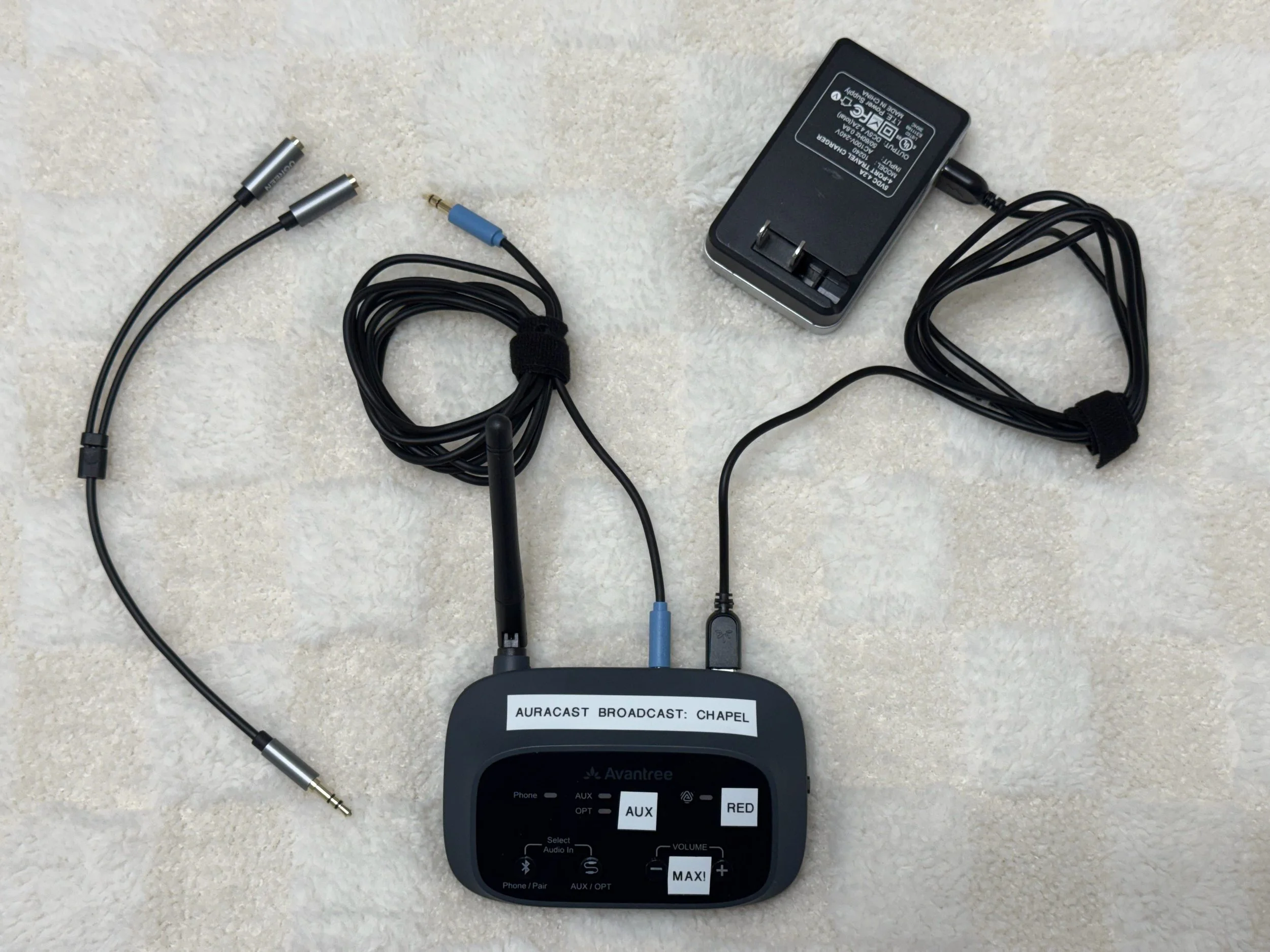
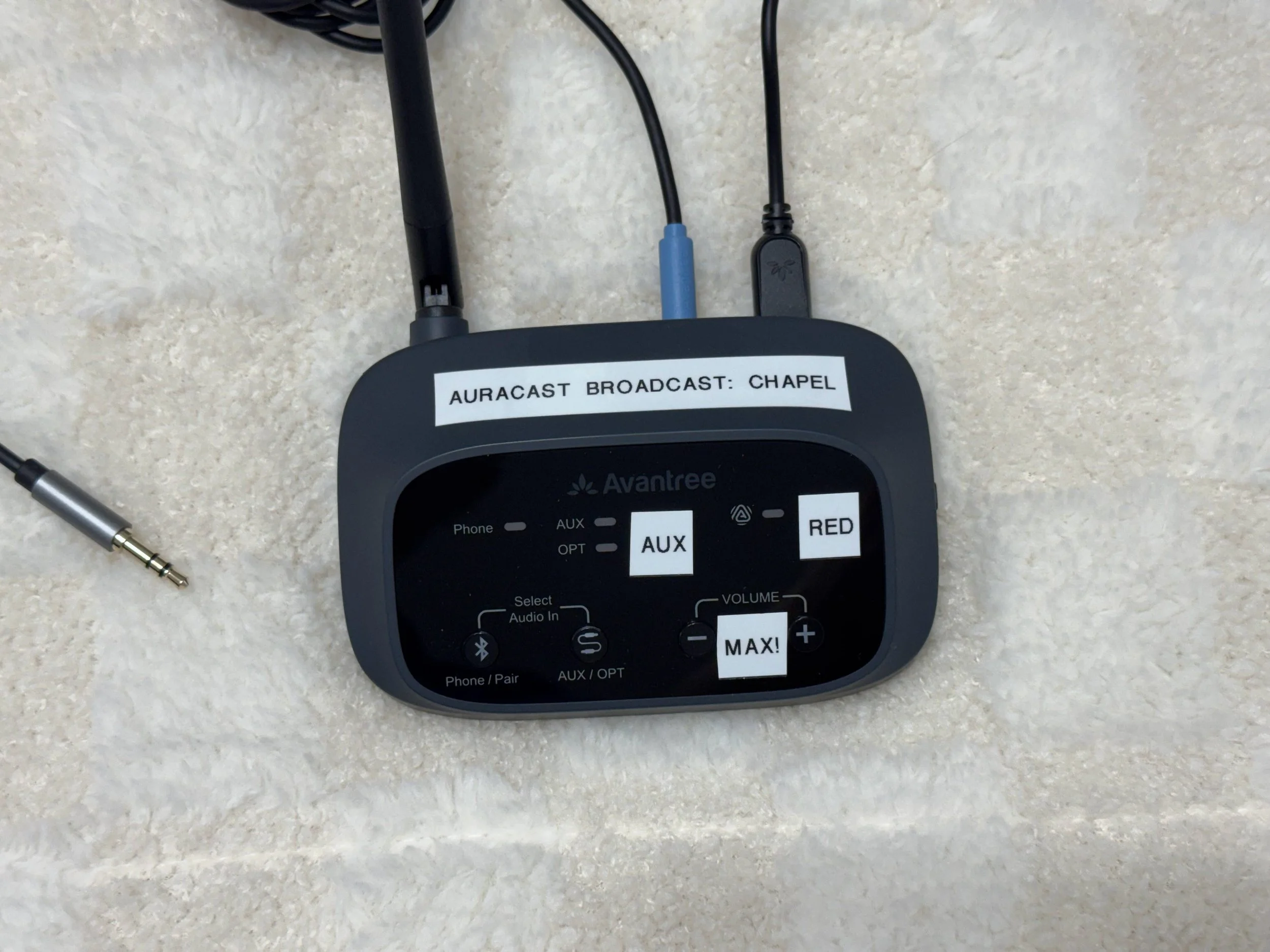
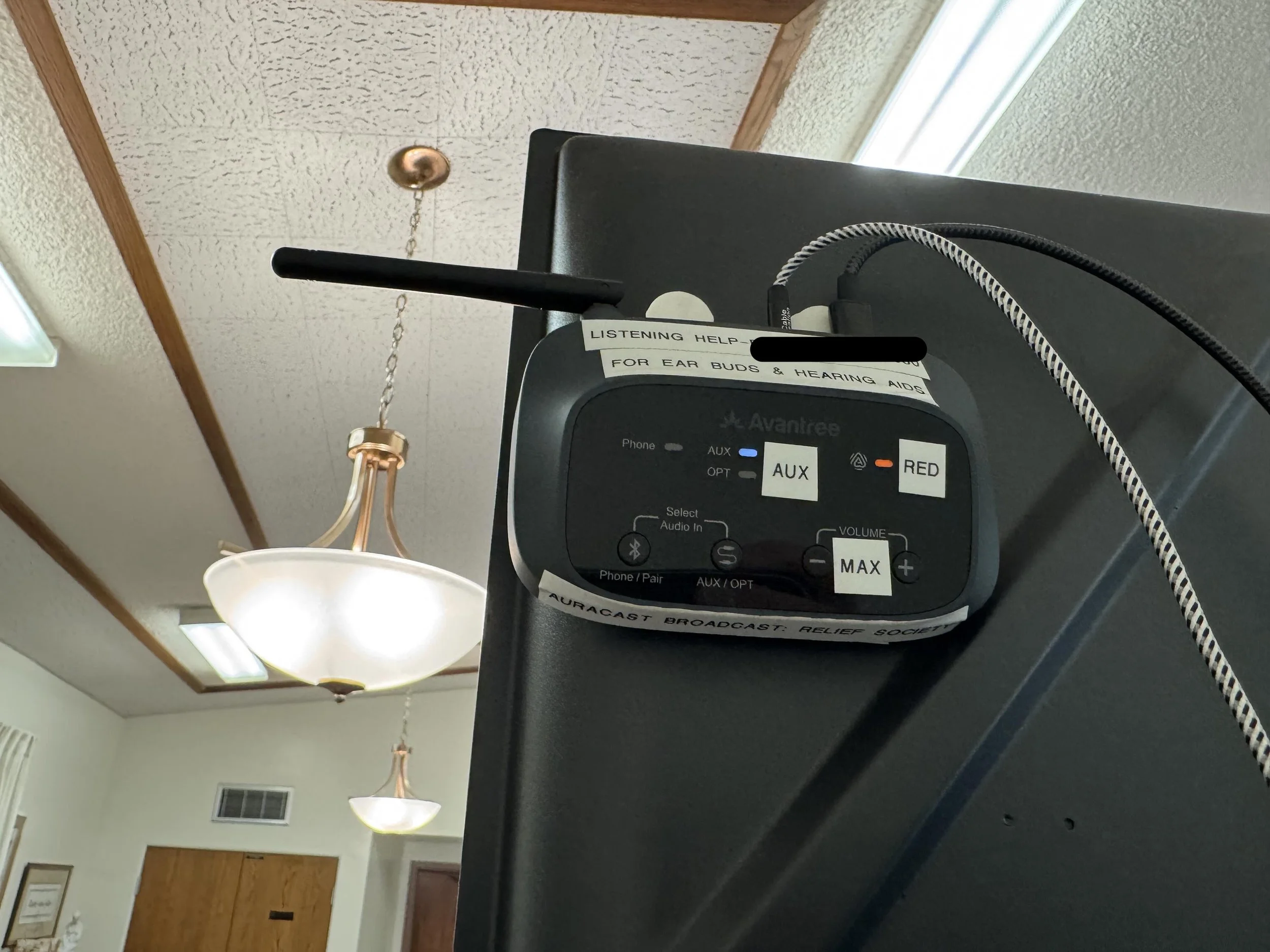
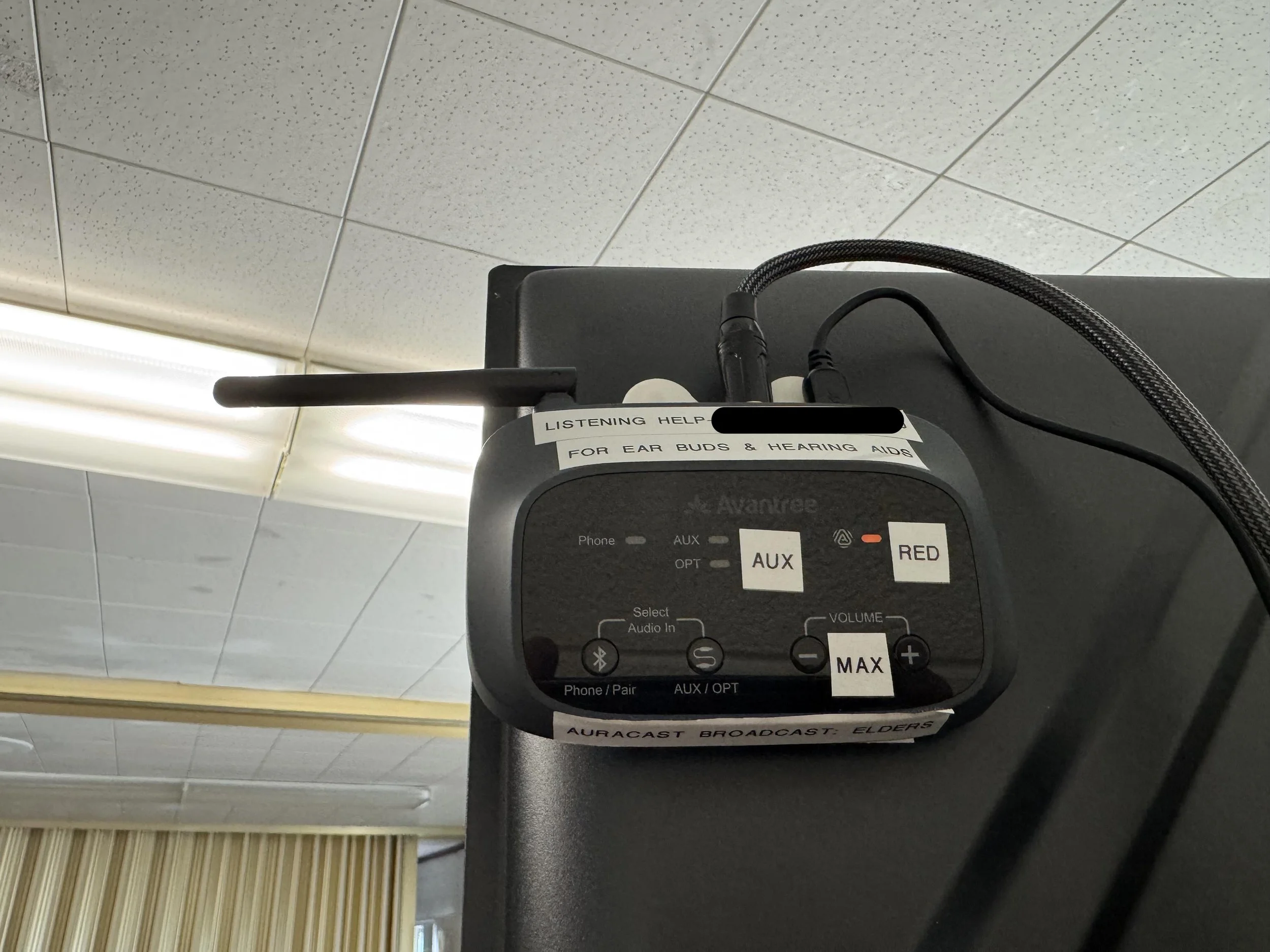
VenuCast Oasis Aura is a compact and capable Auracast transmitter that works especially well for smaller rooms and listening areas.
I tested Oasis Aura in a church building at distances up to 100 feet and in several locations affected by walls and other obstructions. It delivered clear, uninterrupted audio at every measured location with all six receiving devices I tested.
The measured signal became weaker with distance and obstructions, but I did not notice any corresponding degradation in sound quality within the test area.
For my installations, I use Oasis Aura in smaller rooms and reserve the more powerful VenuCast AirCast for the large chapel/gym spaces. AirCast can provide considerably more listening volume to receivers, but Oasis Aura delivered very good coverage and clear audio in the room where I tested it.
A Good Fit for Smaller Rooms
Not every Auracast installation requires the same transmitter.
Large chapels, gyms, and auditoriums may benefit from the additional available listening volume and external antenna flexibility of AirCast. For smaller rooms, Oasis Aura offers a simpler and more compact solution.
I see it fitting particularly well in spaces such as:
Classrooms
Meeting rooms
Church classrooms
Conference rooms
Small chapels
Community rooms
Reception or waiting areas
Other moderately sized listening spaces
Oasis Aura’s compact size makes it easier to place near an existing sound-system output without making the installation feel unnecessarily complicated.
How I Tested Oasis Aura
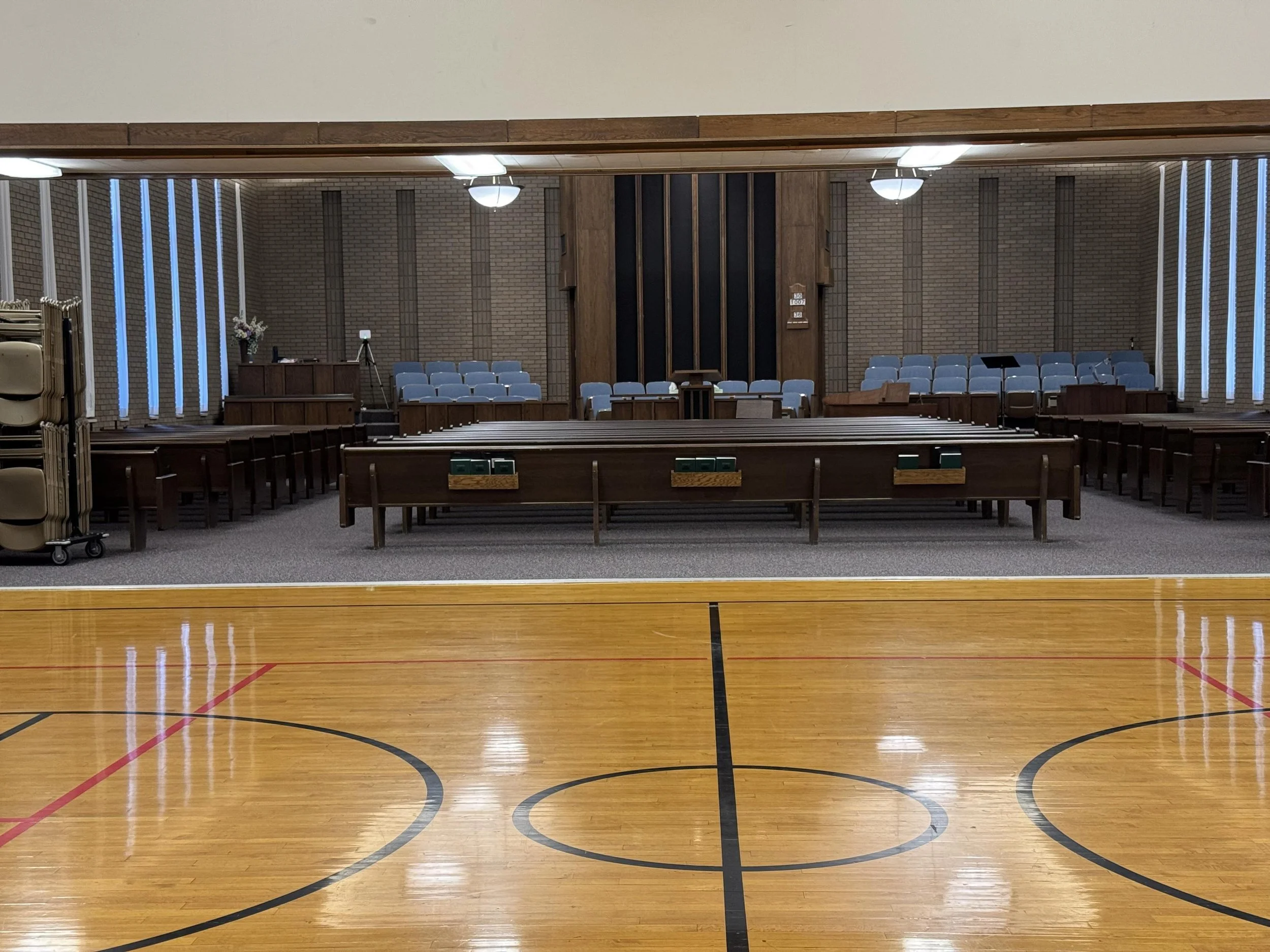
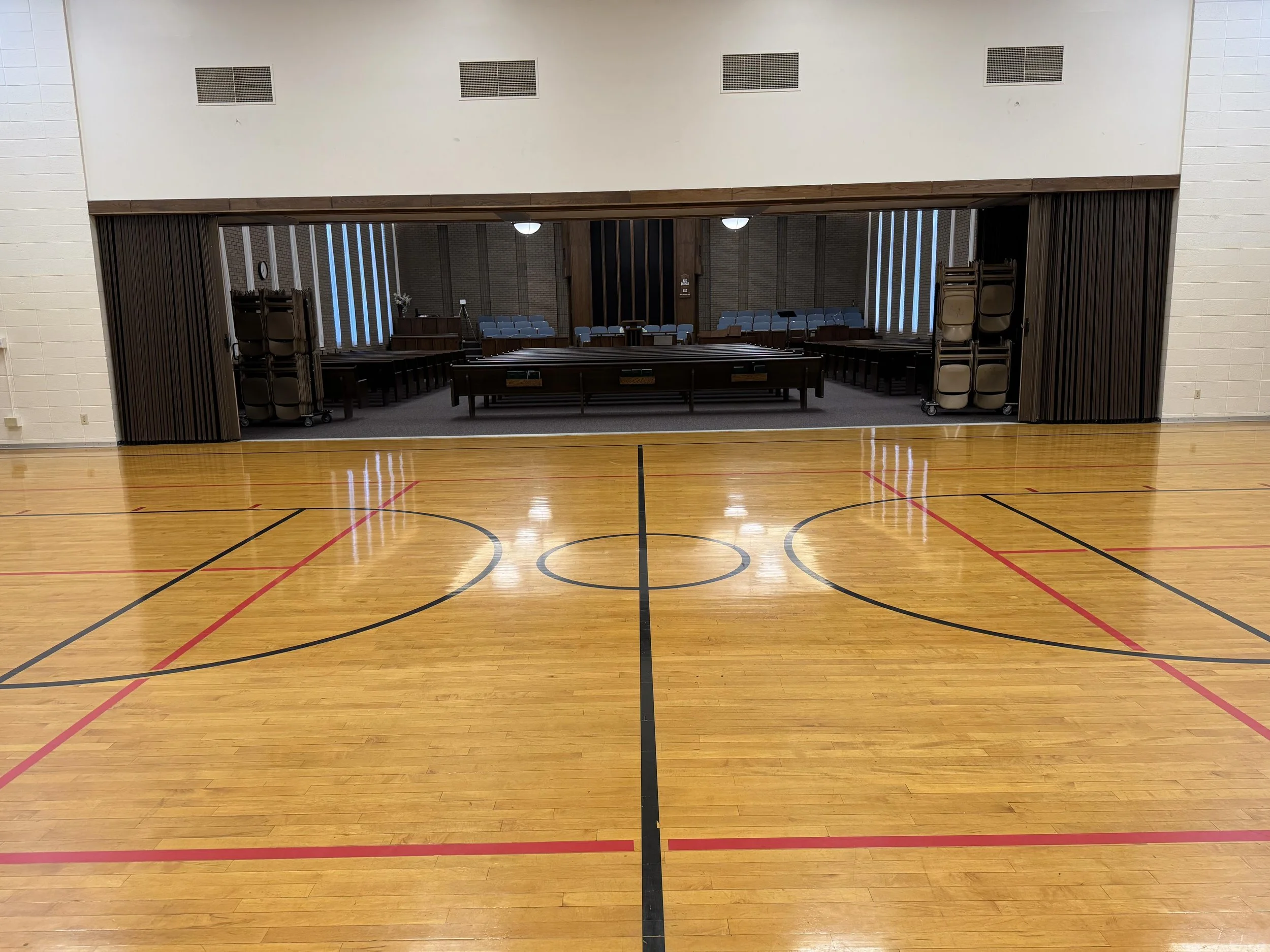
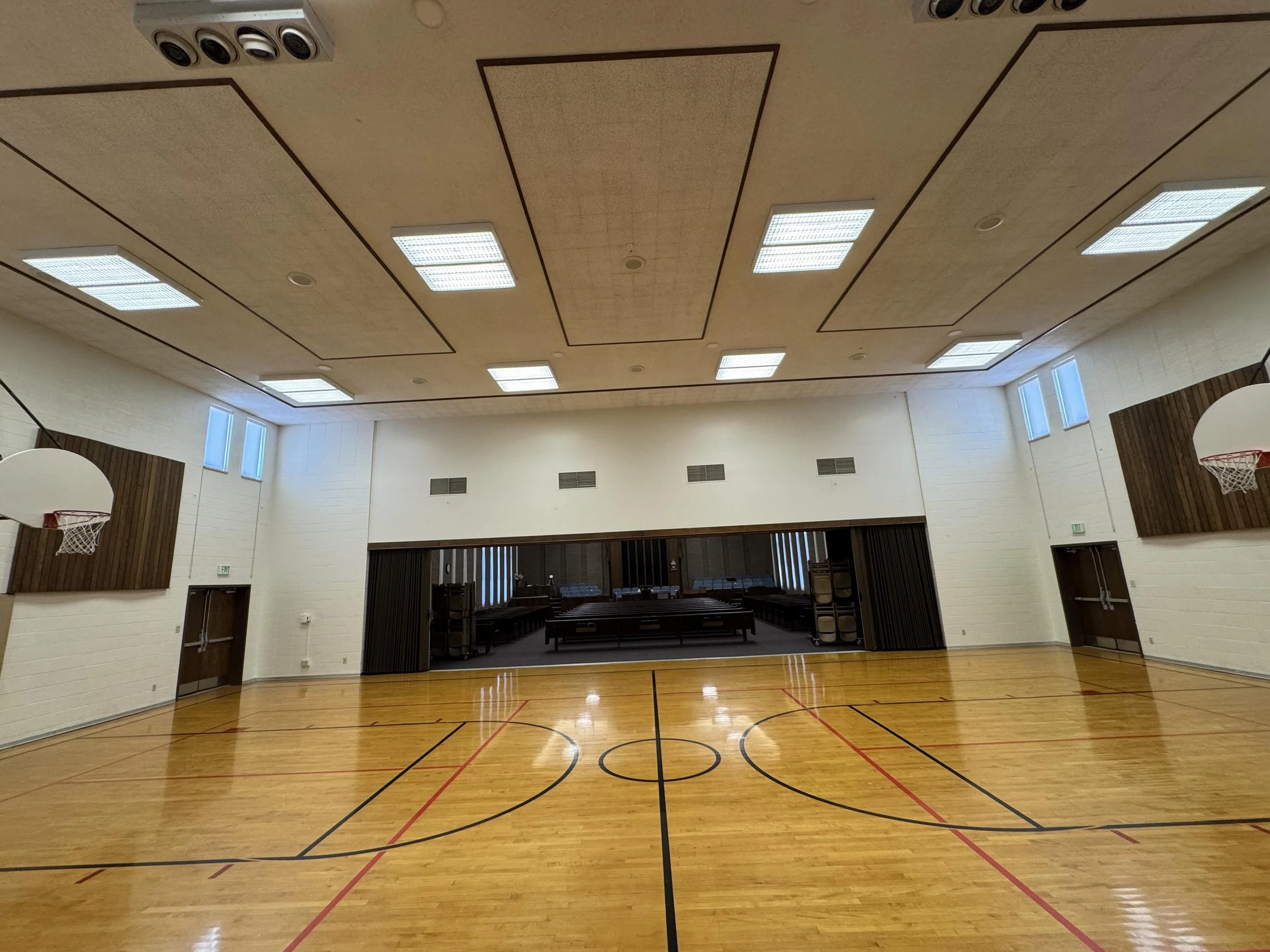
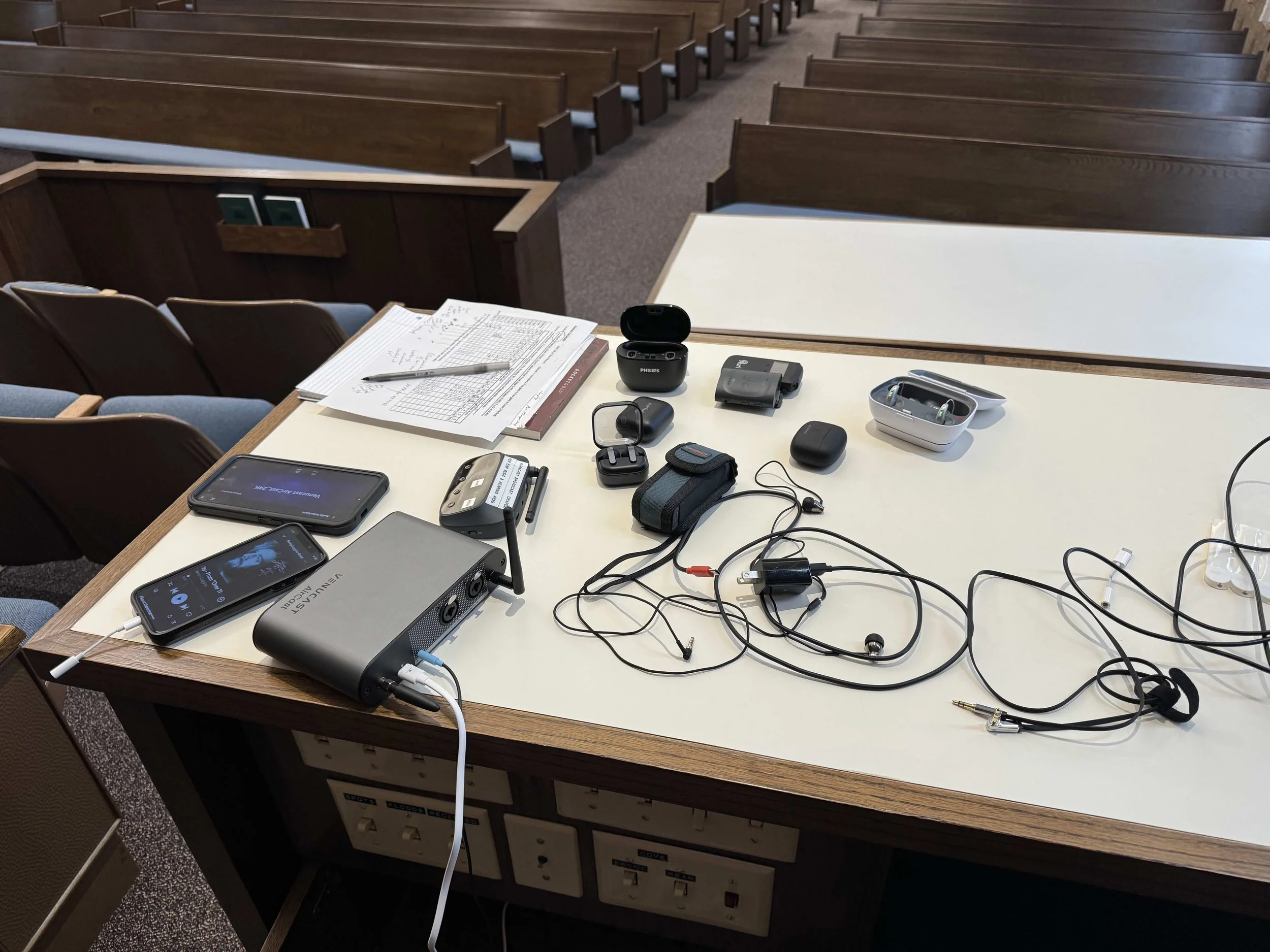
I tested Oasis Aura in the East Building meetinghouse.
The transmitter was connected to the building sound system’s 3.5 mm auxiliary output. I used the same USB-C power cable and audio cable used during my other transmitter tests to keep the setup as consistent as practical.
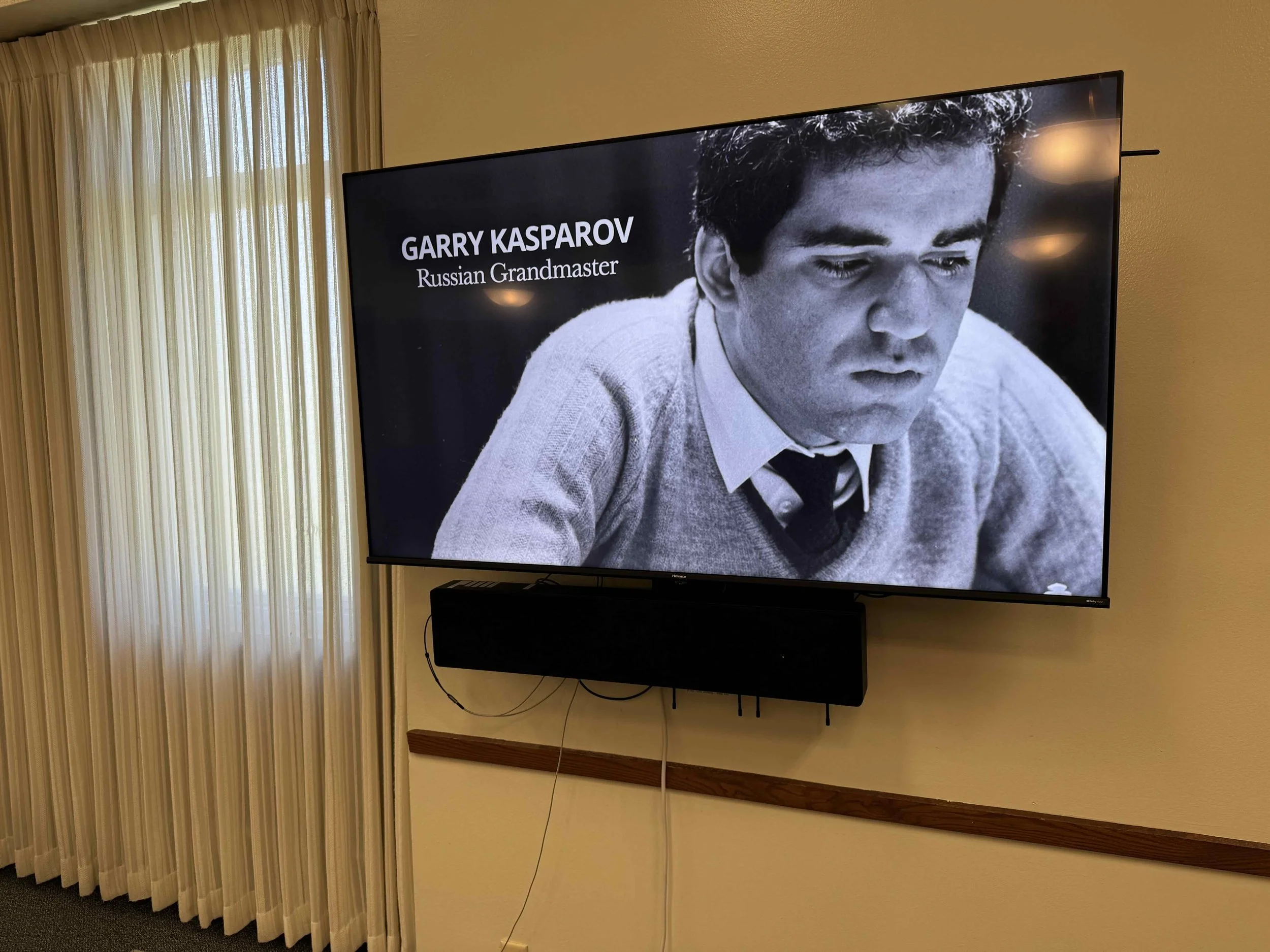
For the audio source, I played audio from a phone through a USB-C-to-3.5 mm adapter into a portable Bose speaker positioned next to the pulpit microphone. The building sound system then carried that microphone audio to the Oasis Aura transmitter.
For signal measurements, I used:
A Samsung Galaxy S24 FE
An OtterBox Defender Pro case
Wi-Fi disabled on the phone
The nRF Connect app
Consistent phone position and orientation
A direct line of sight from the phone toward the transmitter when practical
I observed the Bluetooth broadcast’s Received Signal Strength Indicator, or RSSI, for approximately five seconds at each location.
Individual RSSI readings could vary considerably within only a few seconds. Because of that variability, I took multiple observations and recorded the middle reading rather than depending on a single momentary value.
RSSI is measured in dBm. The values are negative, and a number closer to zero represents a stronger received signal. For example, −50 dBm is stronger than −75 dBm.
RSSI helped me observe broad changes in signal strength, but the actual listening experience was the more important part of the test.
Devices Used for Listening Tests
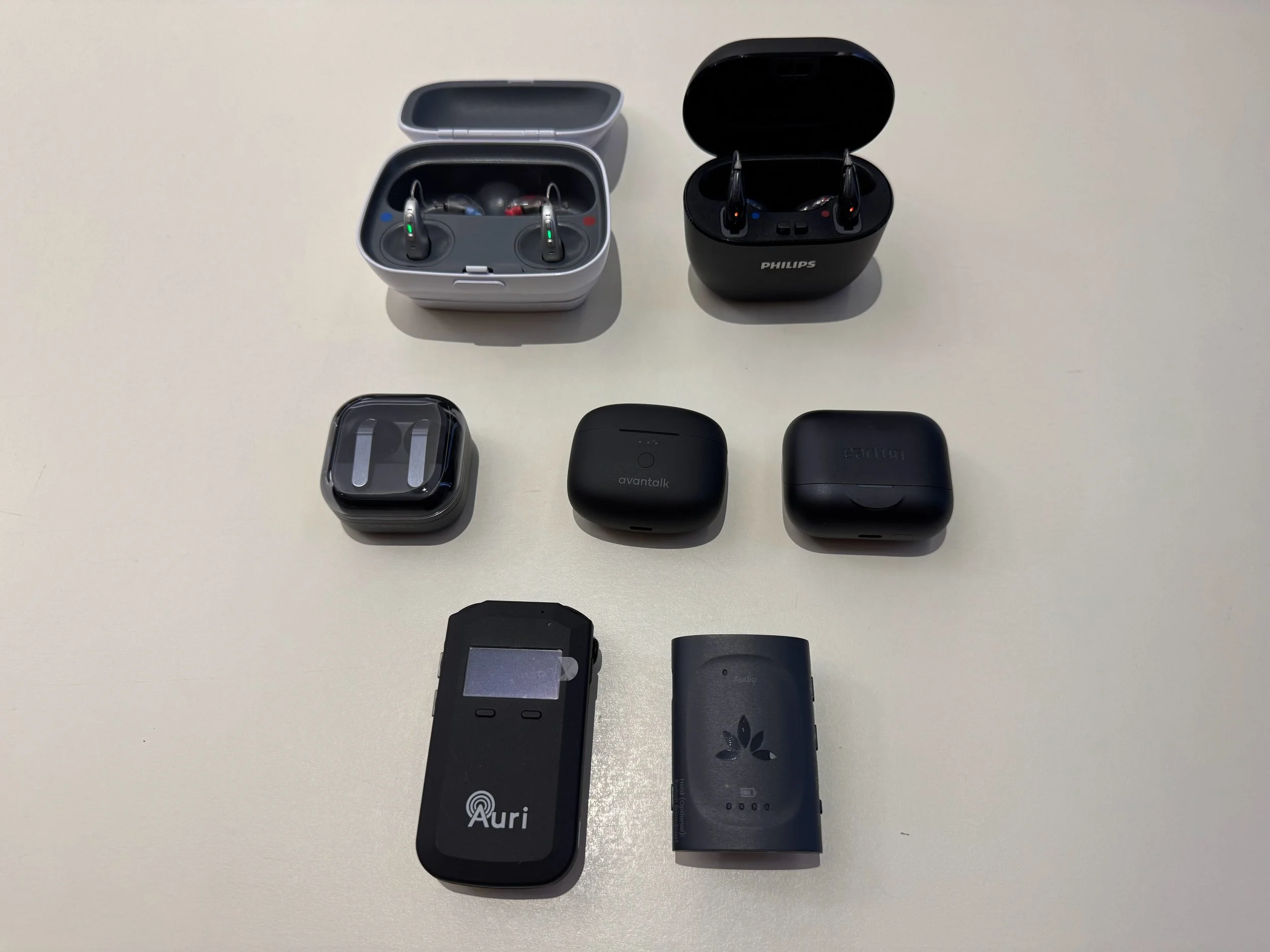
I evaluated Oasis Aura with six different Auracast receiving devices:
Listen Technologies Auri receiver
Venucast AuraClip receiver
Samsung Galaxy Buds4 Pro
Infinity NC
EarFun Air Pro 4+
Philips HearLink 9050 hearing aids
I did not notice any degradation in sound quality with any of these devices at any measured location.
This included the open-room distance tests and locations affected by walls or other obstructions.
Open-Room Distance Test
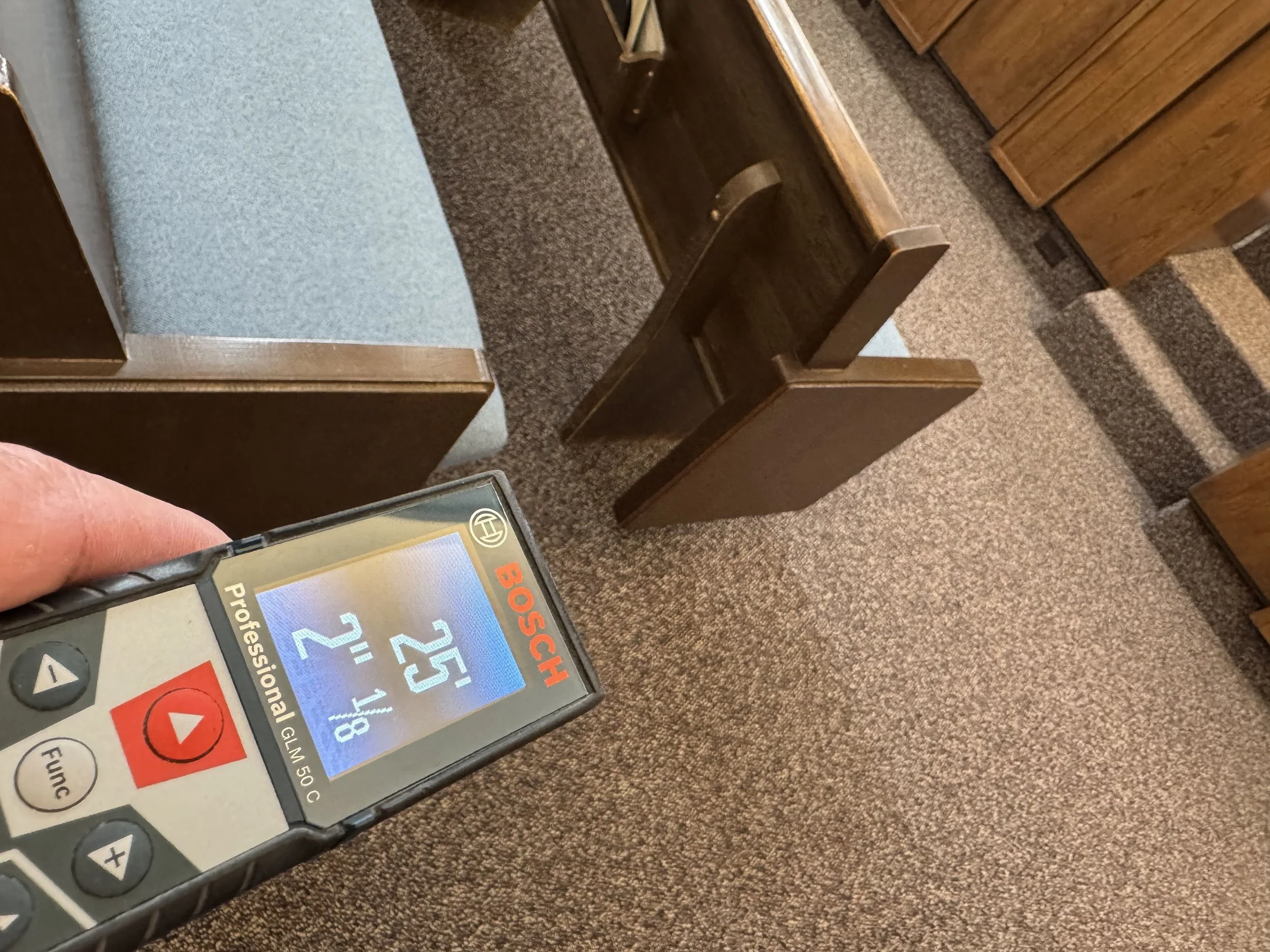
I recorded the following Oasis Aura RSSI measurements:
0 feet: −20 dBm
25 feet: −52 dBm
50 feet: −55 dBm
75 feet: −66 dBm
100 feet: −64 dBm
The overall pattern showed the expected decline in signal strength as distance increased:
−52 → −55 → −66 → −64 dBm
The 100-foot measurement was 2 dB stronger than the 75-foot measurement. This small reversal is not surprising in a real building. Bluetooth signals reflect from walls, ceilings, furniture, people, and other surfaces, so RSSI does not always decline in a perfectly smooth progression.
The correlation between distance and declining RSSI from 25 through 100 feet was approximately r = −0.89.
Because that calculation contains only four observations, it should not be treated as a precise performance prediction. It simply confirms that the test detected the expected broad relationship between distance and decreasing signal strength.
The most useful result was the listening experience: Oasis Aura provided clear, uninterrupted audio throughout the complete 100-foot test.
Testing Around Obstructions
Straight-line distance testing does not represent every real listening situation. People may sit near corners, behind walls, or in adjoining areas where the radio signal must travel through additional building materials.
I therefore tested Oasis Aura in several obstructed locations:
Obstructed left front: −75 dBm
Obstructed left rear: −84 dBm
Obstructed right front: −77 dBm
Obstructed right rear: Not recorded
These measurements were considerably weaker than the open-room results, which is what I would expect when walls and unfavorable building geometry are introduced.
The obstructed left-rear measurement of −84 dBm was the weakest recorded Oasis Aura result. Despite that low RSSI reading, I did not notice any degradation in sound quality at the measured location.
That is an important real-world finding. A relatively weak RSSI measurement does not automatically mean that the listener is experiencing poor audio.
I began to encounter interruptions or static-like artifacts only after moving beyond the measured locations and placing additional walls and other materials between the transmitter and receiving device.
RSSI Is Not the Same as Sound Quality
The Oasis Aura testing demonstrates why RSSI should be treated as supporting evidence rather than the final measure of an Auracast installation.
The measurements showed that:
Signal strength generally decreased with distance.
Walls and building materials weakened the signal.
Individual readings could fluctuate.
RSSI did not always decline in a perfectly smooth sequence.
Oasis Aura still provided a measurable signal at 100 feet.
A measured signal was still available at obstructed locations.
Lower RSSI did not automatically produce audible problems.
The weakest recorded measurement was −84 dBm, yet the audio remained clear at that location.
That does not mean every receiver will always perform perfectly at −84 dBm or that the number represents a guaranteed threshold. Different receivers, antenna orientations, buildings, and sources of interference may produce different results.
It does show why the actual listening test matters more than an isolated number.
The goal is not to achieve the strongest reading in an app. It is to provide clear, dependable audio where people actually listen.
Oasis Aura accomplished that throughout every measured location.
Comparing Oasis Aura and AirCast
I do not see Oasis Aura and AirCast as competing solutions where one must be declared the winner. They fit different installation needs.
In my experience:
Oasis Aura is a compact and capable choice for smaller rooms.
AirCast can provide considerably more listening volume to receivers and is my choice for the large chapel/gym locations.
AirCast’s external antenna also provides additional flexibility when the best transmitter location and best antenna location are not the same.
Oasis Aura keeps a smaller-room installation straightforward while still providing very good practical coverage.
The correct choice depends on the size of the space, the available audio connection, required listening volume, installation location, and expected coverage area.
For a small or moderately sized room, Oasis Aura may provide everything the installation needs.
Test the Actual Room
Every building is different.
Walls, metal objects, furniture, electronic equipment, transmitter height, room geometry, and construction materials can all affect a 2.4 GHz Auracast signal.
Before making an Oasis Aura installation permanent:
Test the front, middle, and rear of the room.
Test the corners.
Test behind any movable partitions.
Test adjoining areas that are supposed to have coverage.
Test with doors in their normal positions.
Listen with the devices people will actually use.
Do not rely entirely on RSSI measurements.
A transmitter can perform extremely well in an open room but become less reliable after the signal passes through several walls. Testing the real listening area is the best way to determine whether one transmitter is sufficient.
For heavily separated rooms, I would generally prefer a transmitter in each major listening area rather than expecting one unit to pass reliably through several walls.
Remember the Microphones
Oasis Aura can broadcast only the audio supplied by the building’s sound system.
If someone speaks without using a microphone, that person’s voice will not be delivered clearly through the Auracast broadcast. This is especially important during audience comments, questions, classes, and meetings with multiple speakers.
Someone listening through Oasis Aura may hear the main speaker beautifully and then miss an unamplified comment from elsewhere in the room.
For a truly accessible meeting, all important speech needs to enter the sound system.
Use the microphone every time.
My Take
My experience with VenuCast Oasis Aura was very positive.
It is a remarkably capable compact transmitter that provided clear, uninterrupted audio throughout every measured location in my test.
Oasis Aura delivered:
Clear audio with all six receiving devices
Reliable listening throughout the 100-foot open-room test
Clear audio at several obstructed locations
Usable audio even at the weakest recorded RSSI location
A compact solution well suited to smaller rooms
The signal measurements naturally weakened with distance and obstructions, but I did not notice sound-quality degradation anywhere within the measured test area.
Interruptions or static-like artifacts began only after I moved beyond those locations and placed additional walls and building materials between the transmitter and receiver.
For my largest chapel/gym locations, I use AirCast because it can provide considerably more listening volume to receivers. For smaller rooms, Oasis Aura provides an appealing balance of compact size, simple installation, and strong practical coverage.
VenuCast Oasis Aura is highly recommended for classrooms, meeting rooms, church classrooms, small chapels, conference rooms, and other spaces that need a compact and capable Auracast transmitter.